
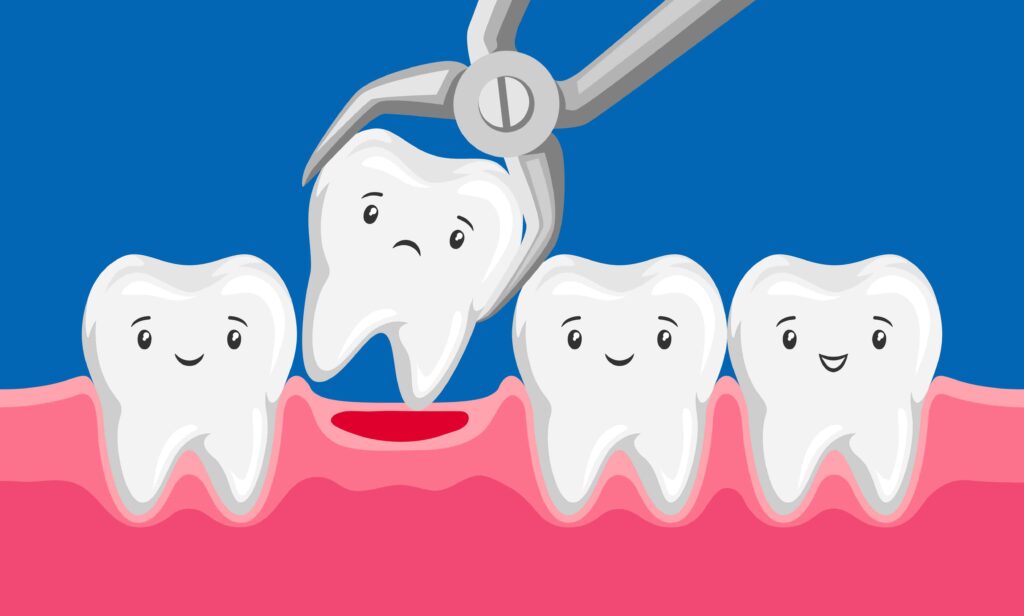
No one wants to have their tooth pulled. After all, the experience doesn’t sound pleasant. However, sometimes an extraction is necessary to preserve the health of the rest of your teeth. The good news is that your dentist will do everything they can to make the experience as comfortable as possible. Read on to learn more about tooth extractions and the different steps you can expect.
Numbing the Site
Before your dentist begins addressing your troubled tooth, they will numb the area surrounding it with a local anesthetic. You might feel a small pinch as the anesthetic is administered. After just a few minutes, you shouldn’t be able to feel any discomfort or sensation in that area.
Tooth Removal
During the extraction itself, your dentist will rock your tooth back and forth. This is done to widen the socket so it can be separated from the ligament. Then, they will grasp the tooth with forceps and pull it from the socket.
Closing the Space
After removing your tooth, your dentist will close the space where your tooth was previously. If any lost bone or infected tissue is present, this will be removed. The socket will be compressed so it can return to its original size. Lastly, your dentist will apply some pressure to the area with clean gauze to minimize bleeding.
Recovery Period
It will take several days for you to recover from a tooth extraction. You may need to keep gauze on the site to retain pressure for about 30 to 60 minutes to stop bleeding. If you have any swelling in the area, use a cold compress to reduce this. Here are some other steps to make your recovery period as quick and comfortable as possible.
- Change gauze as needed
- Get plenty of rest
- Take prescribed and over-the-counter medications as directed by your dentist
- When drinking liquids, avoid using a straw
- Refrain from smoking until the area has healed
- Be careful when brushing and flossing
Soreness and swelling are normal and common after getting a tooth extraction. They should be easy to manage with medication recommended by your dentist. If you are experiencing any extensive bleeding, severe pain, fever, extensive discharge, or anything else that concerns, you don’t hesitate to contact your dentist. This way, they can give you further instructions to help you recover quickly and comfortably.
About the Author
Dr. Ajneesh “AJ” Chhabra earned his dental doctorate from the USC Herman Ostrow School of Dentistry. Since then, he has been committed to continuing education to keep his knowledge and skills sharp. To learn more about tooth extractions or to schedule an appointment at his office in San Antonio, visit his website or call (210) 686-1082.